I. Opening Ceremony | 13:30 – 14:00 h | AULA
I.1 Opening ceremony of “Science Days of Technical University - Sofia” 2026
II.2 Opening of 15th International Scientific Conference on Engineering, Technology and Systems – TechSys 2026
II. Plenary Session | 14:00 – 14:30 h | AULA
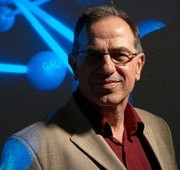 Professor Nikola K. Kasabov is a Life Fellow of IEEE, Fellow of the Royal Society of New Zealand, Fellow of the INNS College of Fellows, DVF of the Royal Academy of Engineering UK. He has Doctor Honoris Causa from Obuda University, Budapest. He is the Founding Director of KEDRI and Professor Emeritus at the School of Engineering, Computing and Mathematical Sciences at Auckland University of Technology, New Zealand.
Generative-, Predictive-, Agentic AI and AGI: All they need is Neural Networks and What can Bulgaria Offer?
Significant advances in AI, including generative-, predictive and agentic AI, have been achieved due to the use neural networks. Most recent advances are based on a class of neural networks – brain-inspired spiking neural networks (SNN). SNN and their neuromorphic hardware platforms, have proved its efficiency not only in their minimal power consumption and massive parallelism, but in adaptive and predictive modelling, due to their spike-based/event-based information processing [1, 2]. The talk presents how these techniques can be used now to build more efficient Generative, Predictive and Agentic AI. Generative AI, such as LLM, generate new information based on pretrained neural network models. The use of SNN makes them more efficient. Predictive AI predict events in a future time and SNN have been used due to their predictive coding feature. Agentic AI designs AI agents that are autonomous entities, able to evolve itself from data, make decisions, take actions, adapt to the environment, communicate with other agents. SNN are fit for this task too. The talk presents current methods, systems, their applications, along with current EU projects and future directions [3].
- K. Kasabov, N., Time-Space, Spiking Neural Networks and Brain-Inspired Artificial Intelligence, Springer-Nature (2019) 750p., https://doi.org/10.1007/978-3-662-57715-8
- K. Kasabov, “NeuCube: A spiking neural network architecture for mapping, learning and understanding of spatio-temporal brain data,” Neural Networks, 52, pp. 62–76, 2014, https://doi.org/10.1016/j.neunet.2014.01.006.
- R K Jha, N Kasabov, et al, A hybrid spiking neural network - quantum framework for spatio-temporal data classification: a case study on EEG data, EPJ Quantum Technologies, (2025) 12:130, 1-23, https://doi.org/10.1140/epjqt/s40507-025-00443-1.
III. Invited Indusrty Presentation | ZEISS Innovation | 14:30 – 15:00 h | AULA